
Thursday, May 24, 2012


Monday, April 16, 2012
Thursday, February 23, 2012
Wednesday, February 8, 2012
OWS Actions Around the World
November 18, 2011 05:53AM
In New York they started flooding Wall Street around 7 am. We wanted enough people to block the streets and shut Wall Street down. There was a big turnout even that early in the morning. The police made all the Wall Street workers show id to go to work, actually helping to make a work slow down.
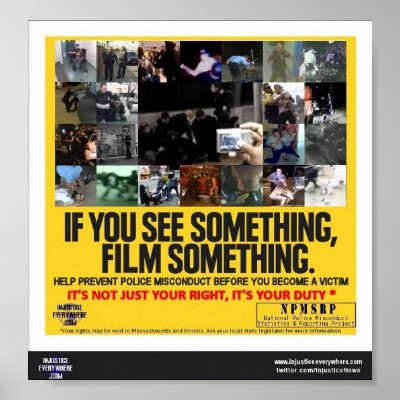
We filled the streets. We were told to stay on the sidewalk and not in the street where traffic would be blocked. When protesters obeyed and got on the sidewalks to avoid arrest, police dragged some of them into the street and then arrested them for being in the street. Some protesters were dragged and beaten. A brother was dragged by his dreadlocks. Women were also dragged.
But in the end the area was blocked off and Wall Street didnt have "business as usual". The ringing of the Wall Street Bell was delayed.
Occupy Your Street!
November 21, 2011 08:52AM
Occupying: the UC experience
by Steve Martinot
After a day of demonstrations (Nov. 9) to protest increasing tuitions
at a state funded university, to protest cuts in staff and curriculum
in an era of horrendously large administrative salaries and bonuses,
though not yet calling for a return of the university to an
educational rather than career focus, students at UC Berkeley decided
to "Occupy" the campus. They set up a few tents on Sproul Plaza, as
occupiers had been setting up such encampments all over the country.
The UC police attacked the small encampment, tore down the tents, used
their truncheons on anyone who got in the way, and arrested a few
students. One woman, in the face of the vicious force the police
exhibited, held out her hands to be handcuffed, and said "arrest me."
She was charged with "resisting arrest." She wasn't the only one.
That evening, more students gathered on Sproul Plaza, with more tents.
They set them up, and surrounded them with their bodies. There were
some 300 people there. The university had said it would come and talk
with the students. That is, dialogue with them. When the
administration representatives showed up, they presented their
conditions and left. They said, you can be here all you like, but we
won't allow tents or sleeping bags. Then they turned and left.
The students had tents and sleeping bags, and decided to defend them.
The police attacked later than night, and beat anyone in their way as
they waded through the bodies to get to those tents and sleeping bags,
and tear them out of the world. The students simply placed their
bodies in the way of the police assault, in defense of the tents. They
did not counterattack. There was no assault against the police. They
simply tried to be a barrier between the police and the tents. It is
so easy to say, and so difficult to think about. Many were badly hurt.
One student ended up in the IC unit in the hospital.
The next evening (Nov. 10), the students had a General Assembly
meeting to decide what to do. One proposal was that they set up the
tents on the sidewalk outside the university. A university cop (a
number were close by listening) then contacted one of the facilitators
and told her that if the students set up tents on the sidewalk outside
campus, they would be treated the same as they had been on Sproul
Plaza.
From that moment on, the basic premise of the discussion was, "if we
set up tents, we will be beaten."
That is, it wasn't, "if we do this, we will be breaking the law." It
wasn't, "if we do that we will get a ticket." It wasn't, "if we do
that, we will be indicted for insurrection." All those niceties of
judicial procedure, in which an action, such as setting up a tent, is
not a crime until it is proven that it violated the law – something
which, in common parlance goes, "a person is innocent until proven
guilty" – had been dispensed with.
To make this clear, if I am in a bar, and punch someone, I have not
committed a crime of assault until it is proven through judicial
procedure that I did not act in self-defense, but rather initiated an
aggressive act.
But those niceties of judicial procedure are gone. Instead, people are
beaten, and are told that they will be beaten right there in the
street if they do a certain thing.
To beat someone under circumstances in which they cannot fight back,
or defend themselves, because of either physical, social, or legal
constraints, constitutes torture. It is torture because it is the
immobilization of persons in order to inflict pain and the inflicting
of pain on someone consciously to get something from them – whether it
is information or obedience, it is the same process. For the police to
beat people in the street or on campus is to torture them in public.
For the state or the university administration to sanction such
beating renders it state sanctioned torture. I am simply calling a
spade a spade.
State sanctioned torture is a violation of international law, of
international treaty of which the US is a signatory, and thus a
violation of the Constitution of the US, which establishes ratified
treaties as part of the law of the land (Article VI). It is unknown to
me whether state sanctioned torture, such as the police beating people
in the street or on a campus, is illegal according to US legislated
law. It is possible that it is not, just as no Congress in the history
of the US has managed to pass a law prohibiting lynching.
When the occupations around the country call for expelling the
corporations and corporate power from our day to day politics and our
elections, they are only calling for a solution to a part of the
problem. We now can see, in the words of the campus police, that we
have a government that is criminal, because it sanctions acts that
have been declared criminal by international agreement.
November 26, 2011 04:59PM
SIOUX FALLS, S.D. (AP) — Aaron Schmidt seemed to have disappeared. The University of South Dakota freshman wasn't responding to emails or cellphone messages, and his family hadn't heard from him in days. It wasn't until police were called that a clue turned up: a credit card purchase for a bus ticket to New York City.
Turns out, the 18-year-old had boarded a bus in eastern Nebraska — a mere $40 in his pocket — with plans to join Occupy Wall Street protesters in the city where the movement began. His father and uncle flew to New York from their homes in Wisconsin, and began handing out fliers with his photo to protesters.
Schmidt eventually responded to a relative's text message, two days after his parents reported him missing to campus police, and he met up with his father and uncle in New York.
Schmidt said he didn't think he needed to let anyone know about his plan to take the more than 1,200-mile trip, and he didn't foresee it being such a big problem. He had taken part in small Occupy Wall Street protests in Omaha, Neb., and South Dakota, but he wanted to see what it was like in the heart of the movement.
"I wanted to learn more about it. It's hard to know exactly what's going on with something until you experience it yourself. It's hard to judge something from afar from reading things simply online," said Schmidt, who had never been to New York before the trip.
He slept on cardboard in Zuccotti Park for two nights because he didn't have a sleeping bag, and he munched on food distributed by other protesters.
Family members had a hunch he might be at the Occupy camp in the park, where anti-Wall Street demonstrators have centered their activities, after his parents scoured his credit card bill and found the bus ticket purchase. His relatives have long known that he was a passionate advocate for what he saw as the world's injustices — but they certainly weren't prepared for his New York trip.
His uncle, Al Boelter, said he wasn't angry with his nephew but worried about his safety in a new city with so little money.
"I said Aaron, it's cool to go around the world, but you just can't take off and not tell a soul," Boelter recalls telling Schmidt when they reconnected. "It's kind of a weird deal. I'm just glad it's over."
Schmidt said his time in New York and at the encampment was "fun" and "interesting," though he said the park was smaller than he expected. The protesters had many views, he said, although he doesn't think that hurts the cause.
"That's a problem for having a unifying voice, but I don't think it's really a problem for the movement because everyone is there for the same fundamental reasons. It's just everyone wants something different out of it," he said.
Schmidt, who is unsure if he'll return to school and has returned to his hometown of Waunakee, Wis., said he will continue to take part in issues he finds important. He is currently volunteering to gather signatures to recall Wisconsin Gov. Scott Walker. The Republican is being targeted largely because of a GOP-backed law he helped pushed through that strips most public employees of their collective bargaining rights.
"If I don't participate, I'm basically accepting whatever happens. I can't complain," he said. "If I participate and try to do something and the end doesn't fit me, I can complain. I can say I went out there and I tried."
November 30, 2011 06:33AM
LOS ANGELES (AP) — In a massive show of force, 1,400 police officers, some in riot gear stormed the Occupy Los Angeles camp early Wednesday, driving protesters from the park and arresting more than 200 who defied orders to leave. Similar raids in Philadelphia led to 50 arrests, but the scene in both cities was relatively peaceful.
Police in Los Angeles and Philadelphia moved in on Occupy Wall Street encampments under darkness in an effort to clear out some of the longest-lasting protest sites since crackdowns ended similar occupations across the country.
Los Angeles Police Chief Charlie Beck praised the officers and the protesters for their restraint and the peaceful way the eviction was carried out.
Officers flooded down the steps of City Hall just after midnight and started dismantling the two-month-old camp two days after a deadline passed for campers to leave the park. Officers in helmets and wielding batons and guns with rubber bullets converged on the park from all directions with military precision and began making arrests after several orders were given to leave.
There were no injuries and no drugs or weapons were found during a search of the emptied camp which was strewn with garbage after the raid. City workers put up concrete barriers to wall off the park while it's restored.
The raid in Los Angeles came after demonstrators with the movement in Philadelphia marched through the streets after being evicted from their site. About 40 protesters were arrested after refusing to clear a street several blocks northeast of City Hall, Philadelphia Police Commissioner Charles Ramsey said. They were lined up in cuffs and loaded on to buses by officers. Six others were arrested earlier after remaining on a street police that police tried to clear.
"The police officers who were involved in this operation were hand-picked for this assignment," Philadelphia Mayor Michael Nutter said. "They're highly trained and disciplined and showed a tremendous amount of restraint and professionalism in carrying out this morning's operation."
Ramsey said he would have preferred to evict the protesters without making arrests, but some refused orders to clear the street and had to be taken into custody. He said three officers sustained minor injuries. Protesters reported some injuries, but none appeared serious.
Los Angeles Mayor Antonio Villaraigosa raised public safety and health concerns in announcing plans for the eviction last week, while Philadelphia officials said protesters must clear their site to make room for a $50 million renovation project.
Defiant Los Angeles campers who were chanting slogans as the officers surrounded the park, booed when an unlawful assembly was declared, paving the way for officers to begin arresting those who didn't leave.
In the first moments of the raid, officers tore down a tent and tackled a tattooed man with a camera on City Hall steps and wrestled him to the ground. Someone yelled "police brutality."
Teams of four or five officers moved through the crowd making arrests one at a time, cuffing the hands of protesters with white plastic zip-ties. A circle of protesters sat with arms locked, many looking calm and smiling.
Opamago Cascini, 29, said the night had been a blast and he was willing to get arrested.
"It's easy to talk the talk, but you gotta walk the walk," Cascini said.
Police used a cherry picker to pluck five men from trees. Two others were in a tree house — one wore a crown and another taunted police with an American flag.
In Philadelphia, police began pulling down tents at about 1:20 a.m. EST after giving demonstrators three warnings that they would have to leave, which nearly all of the protesters followed. Dozens of demonstrators then began marching through the streets and continued through the night.
Ramsey said breaking up the camp in the early-morning hours helped minimize any disruption to businesses and traffic.
"We acknowledge the fact that we are going to have to leave this space .... but in another sense this has been our home for almost two months and no one wants to see their home taken away from them," Philadelphia protestor Bri Barton, 22, said before police began clearing out the camp.
"Whether or not we have this space or work in the city is nowhere near done," she said.
The eviction overall appeared to have been carried out without any significant scuffles or violence.
Later Wednesday morning, workers used front-end loaders to scoop up tents, trash and other debris and dump it into trucks to be hauled away, while others swept the plaza clean.
Demonstrators and city officials in both Los Angeles and Philadelphia were hoping any confrontation would be nonviolent, unlike evictions at similar camps around the country that sometimes involved pepper spray and tear gas. The movement against economic disparity and perceived corporate greed began with Occupy Wall Street in Manhattan two months ago.
The Los Angeles officers staged for hours outside Dodger Stadium before the raid. They were warned that demonstrators might throw everything from concrete and gravel to human feces at them.
"Please put your face masks down and watch each other's back," a supervisor told them. "Now go to work."
The officers came from a wide range of specialized units within the force, including the bomb squad, and the arson unit. Scores of officers in hazmat suits also were sent in to deal with potentially unsanitary conditions in the park.
Before police arrived in large numbers, protesters were upbeat and the mood was almost festive. A protester in a Santa Claus hat danced in the street. A woman showed off the reindeer antlers she had mounted on her gas mask.
February 07, 2012 08:07AM
Published on Concord Monitor (http://www.concordmonitor.com)
Maine
Wave of evictions hits Occupy camps
By David Sharp / The Associated Press
February 7, 2012
A tent city that's among the longest-lived Occupy protest camps is coming down as part of a new wave of eviction orders against demonstrators aligned with the movement in communities including Miami, Washington and Pittsburgh.
Occupy Maine demonstrators removed several large tents over the weekend, and the city yesterday gave them time to remove the rest.
Demonstrators who established the encampment just two weeks after the Occupy Wall Street encampment set up shop in New York City vowed to continue their work to highlight corporate excess and economic inequality.
"Just because the occupation is changing form doesn't mean it's going away," Heather Curtis, one of the campers, said yesterday before she started hauling away her belongings from snow-covered Lincoln Park.
The encampments that were the heart of the movement are becoming scarcer. Yesterday, a judge issued what appeared to be the final notice for Occupy Pittsburgh to leave. Over the past week, the police began removing demonstrators in Miami; Austin, Texas; and Washington, D.C.
The voices are still making themselves heard, though.
Yesterday, about 20 demonstrators disrupted a legislative budget hearing in Albany, N.Y., shouting that millionaires should be taxed more. Albany's camp was busted up in December.
Occupy Maine, which already has office space elsewhere in Portland, plans to continue getting its message out through other means.
"You can only fight for so long and you realize at the end that it's a new beginning," said Deese Hamilton, one of the four named plaintiffs in a lawsuit aiming to keep protesters in Lincoln Park. Hamilton was homeless before joining with the Occupy protesters.
The campers were supposed to be out by yesterday morning, and they dismantled four to five communal tents over the weekend. But 16 tents remained yesterday morning, and the city granted the group's request for more time, giving them until Friday to finish the cleanup.
There was little activity in the morning. But by the afternoon, several people were raking, and others were taking down tents.
"They've asked for this amount of time in order to remove the remaining structures, so we're taking them at their word," said Nicole Clegg, city spokeswoman.
Occupy Maine started up Oct. 1 with a protest in Portland's Monument square and set up in Lincoln Park two days later.
Throughout the frigid Maine winter, when temperatures have dropped below zero, protesters rotated in and out to keep a constant presence, with those in the park keeping the cold at bay by huddling in tents equipped with propane heaters.
At one point, as many as 70 tents were set up in Lincoln Park, but that number had dropped by the time a judge declined to grant Occupy Maine's request for injunction to prevent the city from enforcing an eviction notice issued Dec. 15.
In New York they started flooding Wall Street around 7 am. We wanted enough people to block the streets and shut Wall Street down. There was a big turnout even that early in the morning. The police made all the Wall Street workers show id to go to work, actually helping to make a work slow down.
We filled the streets. We were told to stay on the sidewalk and not in the street where traffic would be blocked. When protesters obeyed and got on the sidewalks to avoid arrest, police dragged some of them into the street and then arrested them for being in the street. Some protesters were dragged and beaten. A brother was dragged by his dreadlocks. Women were also dragged.
But in the end the area was blocked off and Wall Street didnt have "business as usual". The ringing of the Wall Street Bell was delayed.
Occupy Your Street!
November 21, 2011 08:52AM
Occupying: the UC experience
by Steve Martinot
After a day of demonstrations (Nov. 9) to protest increasing tuitions
at a state funded university, to protest cuts in staff and curriculum
in an era of horrendously large administrative salaries and bonuses,
though not yet calling for a return of the university to an
educational rather than career focus, students at UC Berkeley decided
to "Occupy" the campus. They set up a few tents on Sproul Plaza, as
occupiers had been setting up such encampments all over the country.
The UC police attacked the small encampment, tore down the tents, used
their truncheons on anyone who got in the way, and arrested a few
students. One woman, in the face of the vicious force the police
exhibited, held out her hands to be handcuffed, and said "arrest me."
She was charged with "resisting arrest." She wasn't the only one.
That evening, more students gathered on Sproul Plaza, with more tents.
They set them up, and surrounded them with their bodies. There were
some 300 people there. The university had said it would come and talk
with the students. That is, dialogue with them. When the
administration representatives showed up, they presented their
conditions and left. They said, you can be here all you like, but we
won't allow tents or sleeping bags. Then they turned and left.
The students had tents and sleeping bags, and decided to defend them.
The police attacked later than night, and beat anyone in their way as
they waded through the bodies to get to those tents and sleeping bags,
and tear them out of the world. The students simply placed their
bodies in the way of the police assault, in defense of the tents. They
did not counterattack. There was no assault against the police. They
simply tried to be a barrier between the police and the tents. It is
so easy to say, and so difficult to think about. Many were badly hurt.
One student ended up in the IC unit in the hospital.
The next evening (Nov. 10), the students had a General Assembly
meeting to decide what to do. One proposal was that they set up the
tents on the sidewalk outside the university. A university cop (a
number were close by listening) then contacted one of the facilitators
and told her that if the students set up tents on the sidewalk outside
campus, they would be treated the same as they had been on Sproul
Plaza.
From that moment on, the basic premise of the discussion was, "if we
set up tents, we will be beaten."
That is, it wasn't, "if we do this, we will be breaking the law." It
wasn't, "if we do that we will get a ticket." It wasn't, "if we do
that, we will be indicted for insurrection." All those niceties of
judicial procedure, in which an action, such as setting up a tent, is
not a crime until it is proven that it violated the law – something
which, in common parlance goes, "a person is innocent until proven
guilty" – had been dispensed with.
To make this clear, if I am in a bar, and punch someone, I have not
committed a crime of assault until it is proven through judicial
procedure that I did not act in self-defense, but rather initiated an
aggressive act.
But those niceties of judicial procedure are gone. Instead, people are
beaten, and are told that they will be beaten right there in the
street if they do a certain thing.
To beat someone under circumstances in which they cannot fight back,
or defend themselves, because of either physical, social, or legal
constraints, constitutes torture. It is torture because it is the
immobilization of persons in order to inflict pain and the inflicting
of pain on someone consciously to get something from them – whether it
is information or obedience, it is the same process. For the police to
beat people in the street or on campus is to torture them in public.
For the state or the university administration to sanction such
beating renders it state sanctioned torture. I am simply calling a
spade a spade.
State sanctioned torture is a violation of international law, of
international treaty of which the US is a signatory, and thus a
violation of the Constitution of the US, which establishes ratified
treaties as part of the law of the land (Article VI). It is unknown to
me whether state sanctioned torture, such as the police beating people
in the street or on a campus, is illegal according to US legislated
law. It is possible that it is not, just as no Congress in the history
of the US has managed to pass a law prohibiting lynching.
When the occupations around the country call for expelling the
corporations and corporate power from our day to day politics and our
elections, they are only calling for a solution to a part of the
problem. We now can see, in the words of the campus police, that we
have a government that is criminal, because it sanctions acts that
have been declared criminal by international agreement.
November 26, 2011 04:59PM
SIOUX FALLS, S.D. (AP) — Aaron Schmidt seemed to have disappeared. The University of South Dakota freshman wasn't responding to emails or cellphone messages, and his family hadn't heard from him in days. It wasn't until police were called that a clue turned up: a credit card purchase for a bus ticket to New York City.
Turns out, the 18-year-old had boarded a bus in eastern Nebraska — a mere $40 in his pocket — with plans to join Occupy Wall Street protesters in the city where the movement began. His father and uncle flew to New York from their homes in Wisconsin, and began handing out fliers with his photo to protesters.
Schmidt eventually responded to a relative's text message, two days after his parents reported him missing to campus police, and he met up with his father and uncle in New York.
Schmidt said he didn't think he needed to let anyone know about his plan to take the more than 1,200-mile trip, and he didn't foresee it being such a big problem. He had taken part in small Occupy Wall Street protests in Omaha, Neb., and South Dakota, but he wanted to see what it was like in the heart of the movement.
"I wanted to learn more about it. It's hard to know exactly what's going on with something until you experience it yourself. It's hard to judge something from afar from reading things simply online," said Schmidt, who had never been to New York before the trip.
He slept on cardboard in Zuccotti Park for two nights because he didn't have a sleeping bag, and he munched on food distributed by other protesters.
Family members had a hunch he might be at the Occupy camp in the park, where anti-Wall Street demonstrators have centered their activities, after his parents scoured his credit card bill and found the bus ticket purchase. His relatives have long known that he was a passionate advocate for what he saw as the world's injustices — but they certainly weren't prepared for his New York trip.
His uncle, Al Boelter, said he wasn't angry with his nephew but worried about his safety in a new city with so little money.
"I said Aaron, it's cool to go around the world, but you just can't take off and not tell a soul," Boelter recalls telling Schmidt when they reconnected. "It's kind of a weird deal. I'm just glad it's over."
Schmidt said his time in New York and at the encampment was "fun" and "interesting," though he said the park was smaller than he expected. The protesters had many views, he said, although he doesn't think that hurts the cause.
"That's a problem for having a unifying voice, but I don't think it's really a problem for the movement because everyone is there for the same fundamental reasons. It's just everyone wants something different out of it," he said.
Schmidt, who is unsure if he'll return to school and has returned to his hometown of Waunakee, Wis., said he will continue to take part in issues he finds important. He is currently volunteering to gather signatures to recall Wisconsin Gov. Scott Walker. The Republican is being targeted largely because of a GOP-backed law he helped pushed through that strips most public employees of their collective bargaining rights.
"If I don't participate, I'm basically accepting whatever happens. I can't complain," he said. "If I participate and try to do something and the end doesn't fit me, I can complain. I can say I went out there and I tried."
November 30, 2011 06:33AM
LOS ANGELES (AP) — In a massive show of force, 1,400 police officers, some in riot gear stormed the Occupy Los Angeles camp early Wednesday, driving protesters from the park and arresting more than 200 who defied orders to leave. Similar raids in Philadelphia led to 50 arrests, but the scene in both cities was relatively peaceful.
Police in Los Angeles and Philadelphia moved in on Occupy Wall Street encampments under darkness in an effort to clear out some of the longest-lasting protest sites since crackdowns ended similar occupations across the country.
Los Angeles Police Chief Charlie Beck praised the officers and the protesters for their restraint and the peaceful way the eviction was carried out.
Officers flooded down the steps of City Hall just after midnight and started dismantling the two-month-old camp two days after a deadline passed for campers to leave the park. Officers in helmets and wielding batons and guns with rubber bullets converged on the park from all directions with military precision and began making arrests after several orders were given to leave.
There were no injuries and no drugs or weapons were found during a search of the emptied camp which was strewn with garbage after the raid. City workers put up concrete barriers to wall off the park while it's restored.
The raid in Los Angeles came after demonstrators with the movement in Philadelphia marched through the streets after being evicted from their site. About 40 protesters were arrested after refusing to clear a street several blocks northeast of City Hall, Philadelphia Police Commissioner Charles Ramsey said. They were lined up in cuffs and loaded on to buses by officers. Six others were arrested earlier after remaining on a street police that police tried to clear.
"The police officers who were involved in this operation were hand-picked for this assignment," Philadelphia Mayor Michael Nutter said. "They're highly trained and disciplined and showed a tremendous amount of restraint and professionalism in carrying out this morning's operation."
Ramsey said he would have preferred to evict the protesters without making arrests, but some refused orders to clear the street and had to be taken into custody. He said three officers sustained minor injuries. Protesters reported some injuries, but none appeared serious.
Los Angeles Mayor Antonio Villaraigosa raised public safety and health concerns in announcing plans for the eviction last week, while Philadelphia officials said protesters must clear their site to make room for a $50 million renovation project.
Defiant Los Angeles campers who were chanting slogans as the officers surrounded the park, booed when an unlawful assembly was declared, paving the way for officers to begin arresting those who didn't leave.
In the first moments of the raid, officers tore down a tent and tackled a tattooed man with a camera on City Hall steps and wrestled him to the ground. Someone yelled "police brutality."
Teams of four or five officers moved through the crowd making arrests one at a time, cuffing the hands of protesters with white plastic zip-ties. A circle of protesters sat with arms locked, many looking calm and smiling.
Opamago Cascini, 29, said the night had been a blast and he was willing to get arrested.
"It's easy to talk the talk, but you gotta walk the walk," Cascini said.
Police used a cherry picker to pluck five men from trees. Two others were in a tree house — one wore a crown and another taunted police with an American flag.
In Philadelphia, police began pulling down tents at about 1:20 a.m. EST after giving demonstrators three warnings that they would have to leave, which nearly all of the protesters followed. Dozens of demonstrators then began marching through the streets and continued through the night.
Ramsey said breaking up the camp in the early-morning hours helped minimize any disruption to businesses and traffic.
"We acknowledge the fact that we are going to have to leave this space .... but in another sense this has been our home for almost two months and no one wants to see their home taken away from them," Philadelphia protestor Bri Barton, 22, said before police began clearing out the camp.
"Whether or not we have this space or work in the city is nowhere near done," she said.
The eviction overall appeared to have been carried out without any significant scuffles or violence.
Later Wednesday morning, workers used front-end loaders to scoop up tents, trash and other debris and dump it into trucks to be hauled away, while others swept the plaza clean.
Demonstrators and city officials in both Los Angeles and Philadelphia were hoping any confrontation would be nonviolent, unlike evictions at similar camps around the country that sometimes involved pepper spray and tear gas. The movement against economic disparity and perceived corporate greed began with Occupy Wall Street in Manhattan two months ago.
The Los Angeles officers staged for hours outside Dodger Stadium before the raid. They were warned that demonstrators might throw everything from concrete and gravel to human feces at them.
"Please put your face masks down and watch each other's back," a supervisor told them. "Now go to work."
The officers came from a wide range of specialized units within the force, including the bomb squad, and the arson unit. Scores of officers in hazmat suits also were sent in to deal with potentially unsanitary conditions in the park.
Before police arrived in large numbers, protesters were upbeat and the mood was almost festive. A protester in a Santa Claus hat danced in the street. A woman showed off the reindeer antlers she had mounted on her gas mask.
February 07, 2012 08:07AM
Published on Concord Monitor (http://www.concordmonitor.com)
Maine
Wave of evictions hits Occupy camps
By David Sharp / The Associated Press
February 7, 2012
A tent city that's among the longest-lived Occupy protest camps is coming down as part of a new wave of eviction orders against demonstrators aligned with the movement in communities including Miami, Washington and Pittsburgh.
Occupy Maine demonstrators removed several large tents over the weekend, and the city yesterday gave them time to remove the rest.
Demonstrators who established the encampment just two weeks after the Occupy Wall Street encampment set up shop in New York City vowed to continue their work to highlight corporate excess and economic inequality.
"Just because the occupation is changing form doesn't mean it's going away," Heather Curtis, one of the campers, said yesterday before she started hauling away her belongings from snow-covered Lincoln Park.
The encampments that were the heart of the movement are becoming scarcer. Yesterday, a judge issued what appeared to be the final notice for Occupy Pittsburgh to leave. Over the past week, the police began removing demonstrators in Miami; Austin, Texas; and Washington, D.C.
The voices are still making themselves heard, though.
Yesterday, about 20 demonstrators disrupted a legislative budget hearing in Albany, N.Y., shouting that millionaires should be taxed more. Albany's camp was busted up in December.
Occupy Maine, which already has office space elsewhere in Portland, plans to continue getting its message out through other means.
"You can only fight for so long and you realize at the end that it's a new beginning," said Deese Hamilton, one of the four named plaintiffs in a lawsuit aiming to keep protesters in Lincoln Park. Hamilton was homeless before joining with the Occupy protesters.
The campers were supposed to be out by yesterday morning, and they dismantled four to five communal tents over the weekend. But 16 tents remained yesterday morning, and the city granted the group's request for more time, giving them until Friday to finish the cleanup.
There was little activity in the morning. But by the afternoon, several people were raking, and others were taking down tents.
"They've asked for this amount of time in order to remove the remaining structures, so we're taking them at their word," said Nicole Clegg, city spokeswoman.
Occupy Maine started up Oct. 1 with a protest in Portland's Monument square and set up in Lincoln Park two days later.
Throughout the frigid Maine winter, when temperatures have dropped below zero, protesters rotated in and out to keep a constant presence, with those in the park keeping the cold at bay by huddling in tents equipped with propane heaters.
At one point, as many as 70 tents were set up in Lincoln Park, but that number had dropped by the time a judge declined to grant Occupy Maine's request for injunction to prevent the city from enforcing an eviction notice issued Dec. 15.
Wednesday, February 1, 2012
Tuesday, January 31, 2012




Wednesday, January 25, 2012
Anonymous Message to the World Leaders
Send this video to your leader, whether you send it to a representative, mayor, or even the president or whoever runs your country, send it.
Tuesday, January 24, 2012
Wednesday, January 18, 2012
We'd like to talk about something different right now...
The anti-piracy act. Now piracy is illegal and it's something I support stopping, but this legislation that they are making is NOT just getting rid of piracy! It's going to get rid of our freedom of speech! It will make it so we do not have freedom of speech on the internet or freedom of expression. Tell your representative how you fee about this!
http://en.wikipedia.org/wiki/Main_Page
Learn more
http://en.wikipedia.org/wiki/Main_Page
Learn more
Friday, January 13, 2012
Monday, January 9, 2012
A new group called "The Collective" apparently starting to come out of hiding.
They sent us a message to put up on the blog that read:
Hello. We are the Collective. Over the past months since the start of the Occupy Wall Street Movement began, we have seen what the government and the police force are really here for. In one protest, people were asked to clear the streets by police. They did so and went onto the sidewalks. Police pulled them into the streets and arrested them for blocking traffic. This is showing who they stand for, not the people, but for their own corrupt system. We realize however, that there are police and military who actively support Occupy Wall Street. More is coming as we unite the earth together, man holding the hands of man and looking at them with peace and love instead of hate and violence. Albert Einstein once said "I know not with what weapons world war three will be waged with, but world war four will be fought with sticks and stones." He is correct and it is coming true today if we keep on the path we are headed. Why do we hate? Why do we hurt? Why is there so much violence? Our government is a corrupt system. Our president is no more than a figure head. We the people do not have complete control over what this country does. This is not right. You, oh house that stands so white and bright, you are the cause of this. You, oh banks whose money that causes greed, you are the cause of this. You, oh Wall Street who put your money up on a pedestal as a god, you are the cause of this. We are coming, we are all coming for you. Fear us, for we are the Collective. Fear the movement taking place on Wall Street today, for it will turn your corrupt world upside down.
We can't tell you who sent it, they told us to delete the E-Mail they sent after posting this so we respected those wishes.
Hello. We are the Collective. Over the past months since the start of the Occupy Wall Street Movement began, we have seen what the government and the police force are really here for. In one protest, people were asked to clear the streets by police. They did so and went onto the sidewalks. Police pulled them into the streets and arrested them for blocking traffic. This is showing who they stand for, not the people, but for their own corrupt system. We realize however, that there are police and military who actively support Occupy Wall Street. More is coming as we unite the earth together, man holding the hands of man and looking at them with peace and love instead of hate and violence. Albert Einstein once said "I know not with what weapons world war three will be waged with, but world war four will be fought with sticks and stones." He is correct and it is coming true today if we keep on the path we are headed. Why do we hate? Why do we hurt? Why is there so much violence? Our government is a corrupt system. Our president is no more than a figure head. We the people do not have complete control over what this country does. This is not right. You, oh house that stands so white and bright, you are the cause of this. You, oh banks whose money that causes greed, you are the cause of this. You, oh Wall Street who put your money up on a pedestal as a god, you are the cause of this. We are coming, we are all coming for you. Fear us, for we are the Collective. Fear the movement taking place on Wall Street today, for it will turn your corrupt world upside down.
We can't tell you who sent it, they told us to delete the E-Mail they sent after posting this so we respected those wishes.
Wednesday, January 4, 2012
Monday, January 2, 2012
Since we haven't found anything new to put up on the blog, send us something!
We made an email for everyone to send us stuff to use for the blog. We are here to let the peoples voices be heard!
occupyeverywhereblog@yahoo.com
occupyeverywhereblog@yahoo.com
Subscribe to:
Posts (Atom)